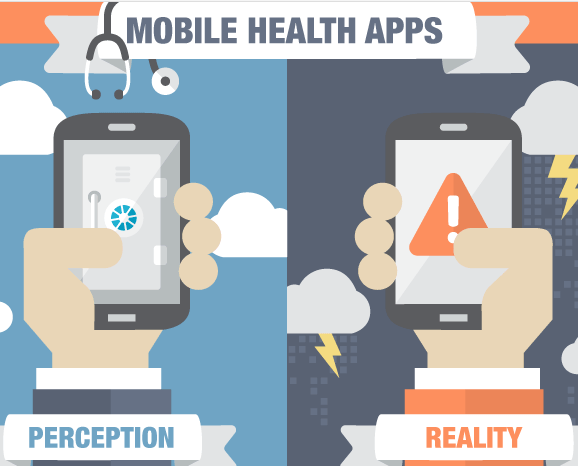
With the convenience of being able to access healthcare services anytime, there does come a risk of security threats. That risk includes having medical and personal information being hacked. In a study conducted by Arxan, an American technology company that specializes in app-level security, they found that of 19 FDA approved mHealth apps that they analyzed for security, 84% of them did not address application code tampering and reverse engineering, which are 2 of the top ten security risks that apps face (Jolt, 2019). This means that since the mHealth apps are not addressing these significant security risks, they are much more vulnerable to having user medical information being hacked. This can be seen through the fact that global health data breaches had increased to 24.5% in 2020, and is rising, which means that there are various ways these mHealth apps are vulnerable to security threats. The reason for this is that since mobile health technologies transmit data through the atmosphere, this means that signals are vulnerable to active and passive attacks that can be intercepted, destroyed, hacked, and modified. It is found that the best way to protect mHealth apps from these risks is to implement two-factor authentication, lock access to the app after a number of incorrect login attempts, and regularly update the apps to reduce vulnerability. However, there is another thing to worry about, which is security in terms of the Internet of Healthcare Things (IoHT). IoHT is the use of the Internet of Things in healthcare in which a network of cloud computing devices store medical information. For the IoHT, the best way to reduce security threats include adding blockchain technology, enabling encryption for health-related communication, and adding device verification. This displays how there are many ways that mHealth apps can tackle security risks that they are inevitably vulnerable to in order to keep the medical and personal health-related data of millions of users confidential. (Bajwa, 2022).