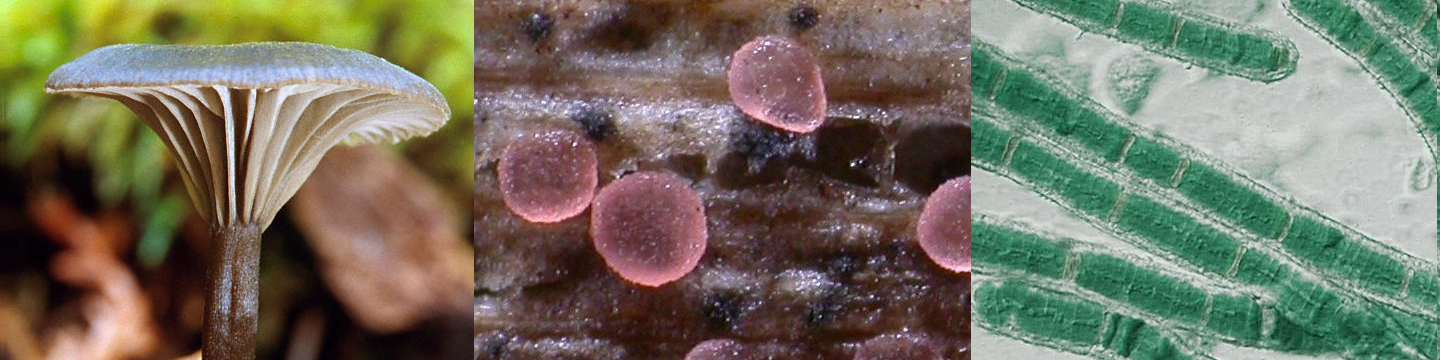
Lichens are among the most remarkable and successful
forms of mutualistic symbiosis known. Lichens are associations of fungi and
photosynthetic algae or cyanobacteria that develop a vegetative body unique
to the symbiosis and not observed in the isolated symbiotic partners. Lichenization is a major nutritional mode in the Kingdom
Fungi, with approximately 20% of described fungi forming lichens, including
approximately half of the phylum Ascomycota. Many other major groups of fungi
associate specifically with lichens. Recent research is beginning to shed new
light on the origins and diversity of these fascinating organisms, including
the mechanisms of symbiont recognition, degree of specificity, and reasons
why lichenization has evolved so commonly in some
groups and so rarely in others.
Lichen ecology, systematics and evolution: In our lab we are presently focusing on these topics:
Basidiolichens: How has lichenization evolved in the Basidiomycota, why is it so
rare, and how does it compare to lichenization in
the Ascomycota? Details of projects can be viewed here.
Cyanolichens: How does the
evolution of lichens that associate with cyanobacteria differ from that of
lichens that associate with green algal photobionts? Details of projects can be viewed here.
Lichenicolous fungi: Many fungi are
known to live inside or on the surface of lichens. These obligate
lichen-associated fungi are widely distributed phylogenetically among nonlichen groups. How has the lichenicolous habit evolved
in fungi? What is their mode of nutrition? Details of projects can be viewed here.
LICHENICOLOUS.NET is an online
worldwide checklist of lichenicolous fungi, including all described species
and links to all isolated cultures and sequences.
Lichen floristics in Washington,
D.C. area: For the past several decades we have also conducted basic lichen
floristic studies locally, most of which were designed to monitor regional
air quality. The most recent of these studies was conducted for the National
Park Service. Objectives,
methods and results of this study can be viewed here, as well as references
to previous studies and publications.
|
|
Home
Molecular Ecology and Evolution:
Microbiome Analysis Center
|