header


gmulogo


Current Research Projects - Lichenicolous fungi:


Lichenicolous fungi live obligately on lichens, as broad-spectrum pathogens, host-specific parasites or commensals. Approximately 1500 species of lichenicolous fungi have been described within a wide range of phylogenetic groups.

Over 95% of lichenicolous fungi are members of various groups of the Ascomycota, and most of these are highly host-specific, relatively nonvirulent parasites. Lichenicolous basidiomycetes are also diverse but far less numerous. Many basidiomycetous members, especially of the mushroom-forming homobasidiomycete clades, exhibit unusually broad host ranges.

It is estimated that there may be 3000 species in 300 genera of lichenicolous fungi globally, of which the European forms are best known at present. Most of the floras of the rest of the world have not been well-studied.

In our lab, lichenicolous fungi are isolated in pure culture for experimental study of the associations. Isolated fungi are also sequenced for phylogenetic placement and study of the evolution of the lichenicolous habit.

Results of our studies and those of other labs indicate that:

  • For reasons that are not yet clear, lichenicolous fungi are difficult to isolate and maintain in culture. Especially difficult are gall-forming and host-specialist groups. Broad-spectrum pathogens are the easiest to isolate.
  • Isolated lichenicoles grow on a variety of standard fungal media and on lichen thallus material in the lab.
  • Isolated lichenicolous fungi are frequently tolerant of lichen secondary metabolites that are inhibitory to other nonlichenicolous fungi.
  • Lichenicolous fungi are known to break down inhibitory lichen defense compounds in culture.
  • The lichenicolous habit has evolved in a wide diversity of fungal lineages from ancestors that were saprotrophic, pathogenic or mutualistic.


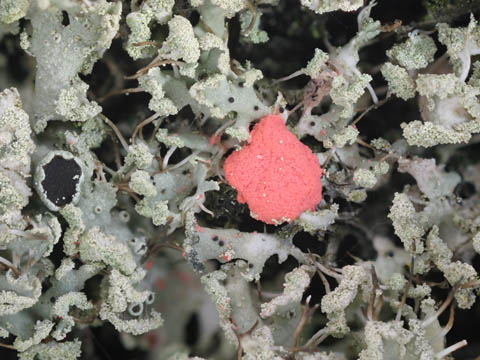
 Illosporiopsis


Illosporiopsis christiansenii on Physcia tenella

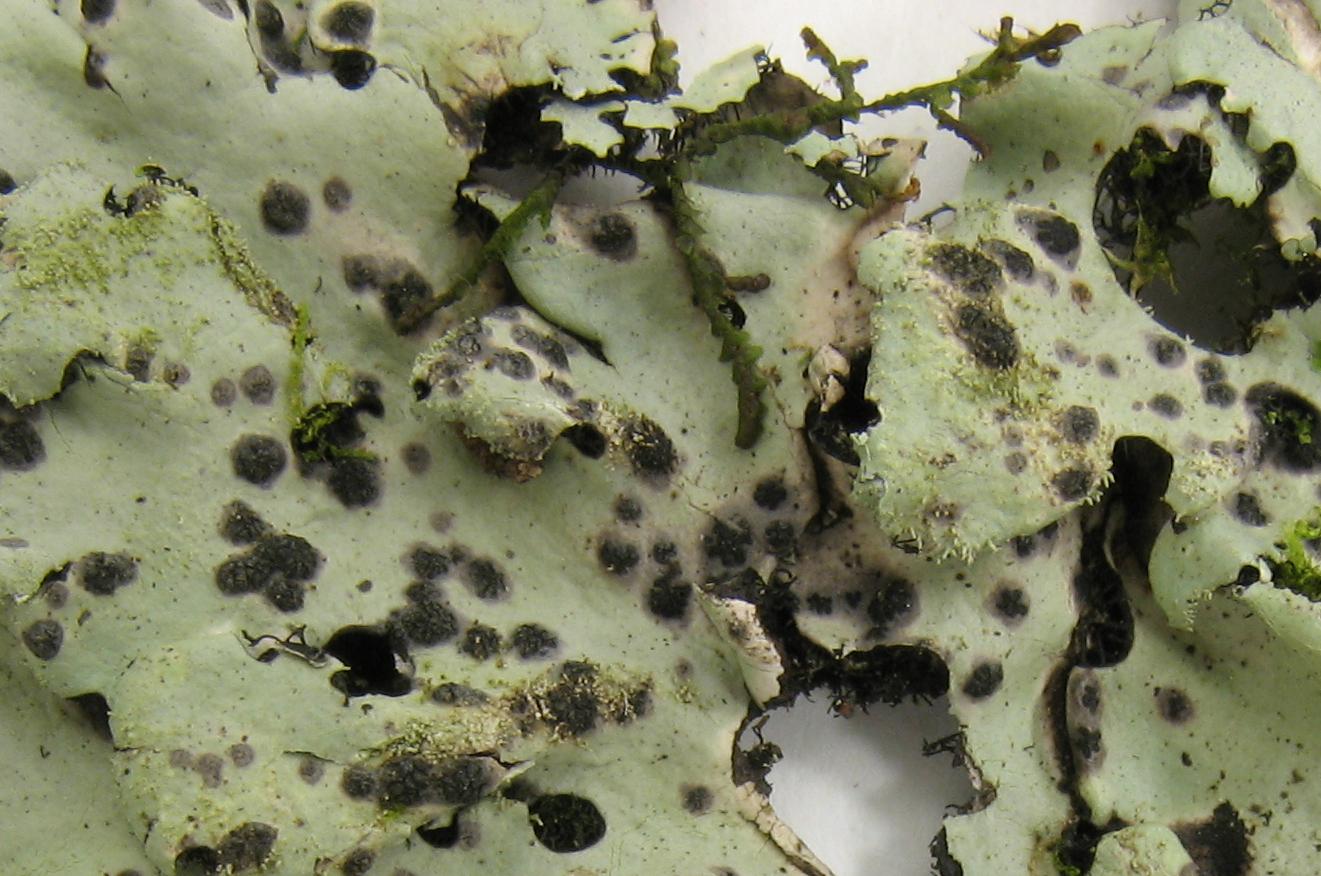
Opegrapha on Heterodermia


Opegrapha melanospila on Heterodermia sp.


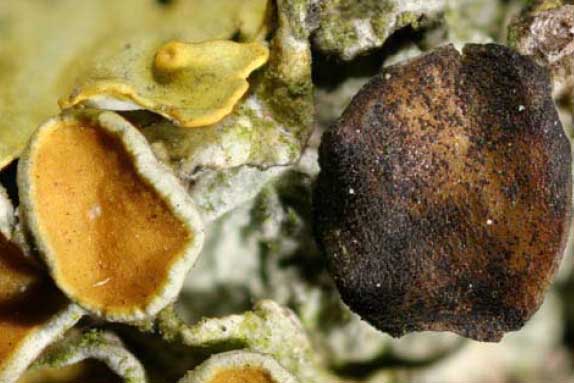
Xanthoriicola


Xanthoriicola physciae on Xanthoria parietina

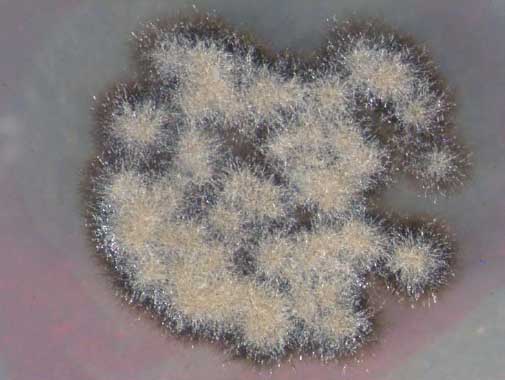
Xanthoriicola in culture


Isolated X. physciae in culture


In collaboration with researchers at several other labs, we have been investigating:

1. The phylogenetic position of lichenicolous fungi within the mushroom-forming lineages of Basidiomycota. Collaboration with P. Diederich, M. Binder, D. Ertz, M. C. Molina.

  • Sikaroodi, M., J. D. Lawrey, D. L. Hawksworth & P. T. DePriest. 2001. Phylogenetic position of selected lichenicolous fungi:  Hobsonia, Illosporium and MarchandiomycesMycological Research 105: 453-460.
  • DePriest, P. T., M. Sikaroodi, J. D. Lawrey and P. Diederich. 2005. Marchandiomyces lignicola sp. nov. shows recent and repeated transition between a lignicolous and a lichenicolous habit. Mycological Research 109: 57-70.
  • Lawrey, J. D., M. Binder, P. Diederich, M. C. Molina, M. Sikaroodi and D. Ertz.  2007. Phylogenetic diversity of lichen-associated homobasidiomycetes. Molecular Phylogenetics and Evolution 44: 778-789.


2. Isolation and culture of lichenicolous fungi. Collaborations with P. Diederich, M. Sikaroodi, P. DePriest, M. C. Molina, A. Torzilli, K. O'Donnell, R. Lowen, A. Rossman.

  • Lawrey, J. D. 1995. The chemical ecology of lichen mycoparasites:  a review.  Canadian Journal of Botany 73 (Suppl 1): 603-608.
  • Torzilli, A. P. & J. D. Lawrey. 1995. Lichen metabolites inhibit cell wall-degrading enzymes produced by the lichen parasite Nectria parmeliae. Mycologia 87: 841-845.
  • Lawrey, J. D. 1997. Isolation, culture, and degradative behavior of the lichen parasite Hobsonia santessonii. Symbiosis 23: 107-116.
  • Lawrey, J. D., A. P. Torzilli & V. Chandhoke. 1999. Destruction of lichen chemical defenses by a fungal pathogen. American Journal of Botany 86: 184-189.
  • Torzilli, A. P., P. A. Mikelson & J. D. Lawrey. 1999. Physiological effect of lichen secondary metabolites on the lichen parasite Marchandiomyces corallinus. Lichenologist 31: 307-314.
  • Torzilli, A. P., S. Balakrishna, K. O’Donnell & J. D. Lawrey. 2002. The degradative activity of a lichenicolous Fusarium sp. compared to related entomogenous species.  Mycological Research 106: 1204-1210.
  • Lawrey, J. D.  2002. Isolation and culture of lichenicolous fungi. Chapter 6 in Methods in Lichenology (Kranner, I., Beckett, R. and Varma, A., eds.). Springer-Verlag, Berlin.  Pp. 75-84.
  • Lawrey, J. D. and P. Diederich. 2003. Lichenicolous fungi:  interactions, evolution and biodiversity.  The Bryologist 106: 80-120.
  • Molina, M. C., P. T. DePriest and J. D. Lawrey. 2005. Genetic variation in the widespread lichenicolous fungus Marchandiomyces corallinus. Mycologia 97: 454-463.