avatar

Md. Badsha Biswas

PhD Student in Computer Science
George Mason University
mbiswas2 (at) gmu.edu

Skills & Expertise

Research Interests

Machine Learning Deep Learning Natural Language Processing LLMs Reinforcement Learning Multimodal Reasoning Generative AI

Programming

Python Java (Graduate Teaching Assistant) C C++ JavaScript TypeScript R SQL MATLAB

Agentic AI & Orchestration

LangGraph LangChain MCP (Model Context Protocol) tool/function calling multi-agent graphs memory evaluators rerankers (BGE, Cohere, ColBERTv2) Tavily (web search) CrewAI

Libraries & Frameworks

PyTorch TensorFlow scikit-learn Pandas NumPy SpaCy Tableau OpenCV FastAPI Spring Boot Keras JAX Hugging Face PySpark Hadoop

Data & Pipelines

Weaviate Milvus FAISS MongoDB PostgreSQL (Cloud SQL) Apache Kafka

MLOps/DevOps

Docker Kubernetes (GKE) Git CI/CD model packaging and REST/gRPC caching batching KV cache Azure ML/AI Compute Engine Cloud Storage Cloud Load Balancing Cloud DNS AWS


About Me

PhD Student & Researcher

Actively Seeking Summer Internship 2026

Open to exciting opportunities in Machine Learning, NLP, and AI research

I am a PhD student in Computer Science at George Mason University, specializing in Machine Learning, Deep Learning, Natural Language Processing, LLMs, Reinforcement Learning, Multimodal Reasoning, and Generative AI.

My research focuses on building reliable, evidence grounded LLM systems especially Retrieval-Augmented Generation (RAG) and agentic AI pipelines that can plan, retrieve, verify, and write with transparency. I specialize in LLMs (RAG, Agentic AI), reinforcement learning, multimodal reasoning, and generative AI , and I work with Dr. Özlem Uzuner on methods that reduce hallucinations by improving retrieval quality and handling agreement vs. disagreement across evidence sources. My recent work includes a multi-source, retrieval-based claim verification direction that explicitly models source-level disagreement using LLMs, along with applied research on LLM prompting for health-related social media understanding aiming to make LLM outputs not only fluent, but auditable and trustworthy.

Recently, I built a multimodal RAG + Deep Research system that achieved 1.5×–1.7× faster responses, 35–40% efficiency gains, and 98% reduction in reasoning time, and I developed a multi-agent writing workflow that reduced first-draft time by 95%. Earlier, I worked as a Software Engineer at BJIT (Tokyo), where I built a personalized recommender/advertising system that reduced manual campaign tuning by 70%.

I am optimistic about making a beautiful world with Science and Technology. I am actively looking for research opportunities and collaborations in my areas of interest and would be delighted to connect with fellow researchers and potential collaborators.

"If an elderly but distinguished scientist says that something is possible, he is almost certainly right; but if he says that it is impossible, he is very probably wrong."

— Arthur C. Clarke

Publications

Data Augmentation for Classification of Negative Pregnancy Outcomes in Imbalanced Data

arxiv

Md. Badsha Biswas

arXiv preprint arXiv:2512.22732, 2025

Recent Publication

Quantitative Currency Evaluation in Low-Resource Settings through Pattern Analysis to Assist Visually Impaired Users

ICDM

MSI Ovi, M Hossain, Md. Badsha Biswas

arXiv preprint arXiv:2509.06331, 2025

Recent Publication

Mason NLP-GRP at# SMM4H-HeaRD 2025: Prompting Large Language Models to Detect Dementia Family Caregivers

AAAI

Md. Badsha Biswas, Ozlem Uzuner

Training 4523 (2201), 6724, 2025

Recent Publication

Research Projects

X-FACT: A Cross-Modal Reasoning Framework for Multimodal Fact-Checking

Ongoing
Contributors: Md Badsha Biswas
Timeline: 2025 — Present
Contact: mbiswas2@gmu.edu

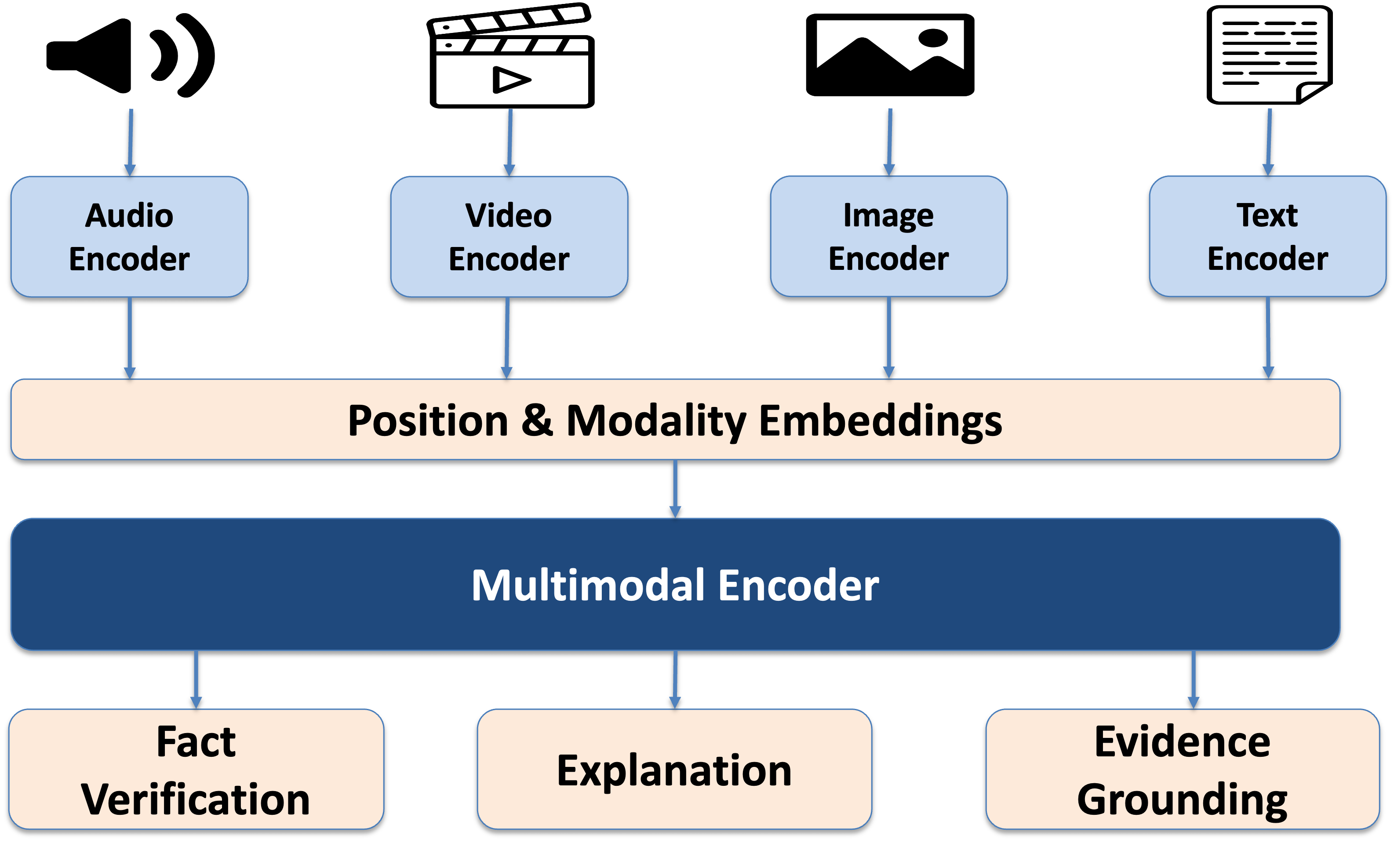
X-FACT avoids collapsing multimodal inputs into text-only representations. Instead, it encodes each modality natively, applies position and modality embeddings, and performs joint multimodal reasoning to produce veracity decisions, evidence grounding, and concise explanations.

X-FACT overview diagram

The joint reasoning pipeline improves grounding, robustness, and interpretability by producing evidence-grounded veracity labels and concise human-readable explanations tied to specific regions or frames.

Key Contributions:
  • Native cross-modal reasoning (text, image, audio, video)
  • Evidence grounding to specific frames/regions/segments
  • Concise, human-readable explanations tied to evidence
Multimodal Fact-Checking X-FACT

MAFC-7: A Robust, Open-World Multi-Agent Fact-Checking Architecture

Ongoing
Status: Ongoing — Development & Evaluation
Focus: Robustness, Provenance, Temporal Validity
Datasets: FEVER + Open-web RAG stress tests

MAFC-7 is a seven-role multi-agent architecture that separates retrieval, verification, opposition, and judging while elevating two safety-critical roles—Timekeeper (temporal validity) and Provenance/Forensics (source authenticity, trust, and poison detection)—as blocking checks. It couples provenance-aware retrieval and poison-aware debate policies with span-faithful rationales to improve robustness, abstention-aware coverage, and explanation fidelity in open-world fact-checking.

Key Elements:
  • Seven roles including Orchestrator, Retriever, Verifier, Skeptic, Judge, Timekeeper, Provenance/Forensics
  • Provenance- and poison-aware retrieval & reranking
  • Span-faithful rationales and abstention under insufficient evidence
Details Code (TBD)
Evaluation: accuracy, ASR, faithfulness, provenance sensitivity
Multi-Agent Fact-Checking Robustness

Contradiction to Consensus: Dual-Perspective, Multi-Source Fact Verification with Source-Level Disagreement using LLM

ACL ARR 2025 (Submitted)
Authors: Md Badsha Biswas, Ozlem Uzuner   (28 Jul 2025; modified: 20 Aug 2025)
Venue: ACL ARR 2025
License: CC BY 4.0

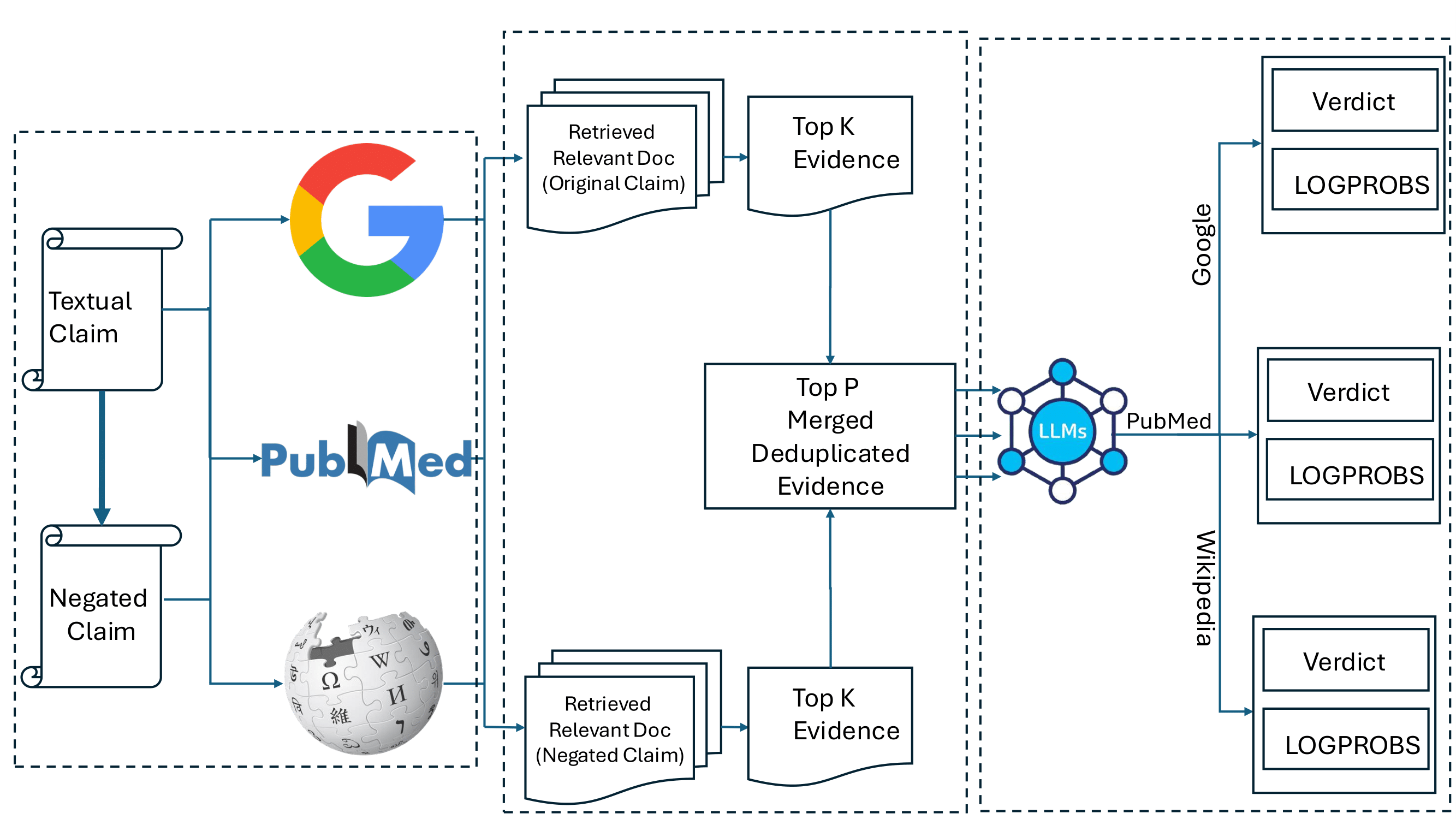
TL;DR: This paper investigates three key dimensions of fact-checking: the incorporation of multiple viewpoints, the utilization of diverse sources, and the analysis of disagreement among them.

Framework overview diagram

Abstract: The rapid spread of misinformation across digital platforms poses significant societal risks. Yet most automated fact-checking systems depend on a single knowledge source and prioritize only supporting evidence without exposing disagreement among sources, limiting coverage and transparency. To address these limitations, we present a complete system for open-domain fact verification (ODFV) that leverages large language models (LLMs), multi-perspective evidence retrieval, and cross-source disagreement analysis. Our approach introduces a novel retrieval strategy that collects evidence for both the original and the negated forms of a claim, enabling the system to capture supporting and contradicting information from diverse sources (Wikipedia, PubMed, Google). These evidence sets are filtered, deduplicated, and aggregated across sources to form a unified and enriched knowledge base that better reflects the complexity of real-world information. This aggregated evidence is then used for veracity classification using LLMs. We further enhance interpretability by analyzing model confidence scores to quantify and visualize inter-source disagreement. Through extensive evaluation on four benchmark datasets with five LLMs, we showed that knowledge aggregation not only improves claim classification performance but also reveals differences in source-specific reasoning. Our findings underscore the importance of embracing diversity, contradiction, and aggregation in evidence for building reliable and transparent fact-checking systems. Our full code is available on GitHub.

Resources:
Claim Verification Retrieval LLM

Selective Attention Filtering for Prompt Robustness

Ongoing
Focus: LLM robustness, distraction suppression
Evaluation: GSMIR, SciAux, Disfl-QA, Adversarial QA
Metrics: EOI, SI, ARR, AURC-R

Large Language Models (LLMs) often degrade when prompts contain irrelevant or distracting content because they tend to attend to all tokens indiscriminately. Inspired by neural mechanisms of selective attention and inhibition, this project proposes a pre-reasoning pipeline that filters, organizes, and suppresses low-value context so model outputs remain invariant or minimally affected by distractors.

The framework decomposes context handling into five modular stages: (1) perceptual segmentation to produce coherent chunks; (2) a relevance gate that scores, reranks, and prunes with recall-friendly thresholds; (3) focused attention that orders evidence, groups related facts, and produces brief tie-in summaries; (4) inhibition that suppresses residual distractors via span-level rules, query-conditioned penalties, and (for open-weights models) attention masks; and (5) reasoning/generation over the cleaned context with lightweight verification and an on-the-fly invariance test.

Planned Evaluation & Contributions:
  • Robustness tests across distractor-rich settings and adversarial multi-hop QA
  • New invariance metrics and stage-wise KPIs for retrieval, compression and suppression
  • Practical recipes that reduce prompt tokens and latency while improving stability under noisy inputs
Details Code (TBD)
Status: Design → Evaluation
LLM Robustness Filtering

Awards & Honors

[2026]

Summer Research Award — George Mason University

Recognition for summer research contribution

[2019]

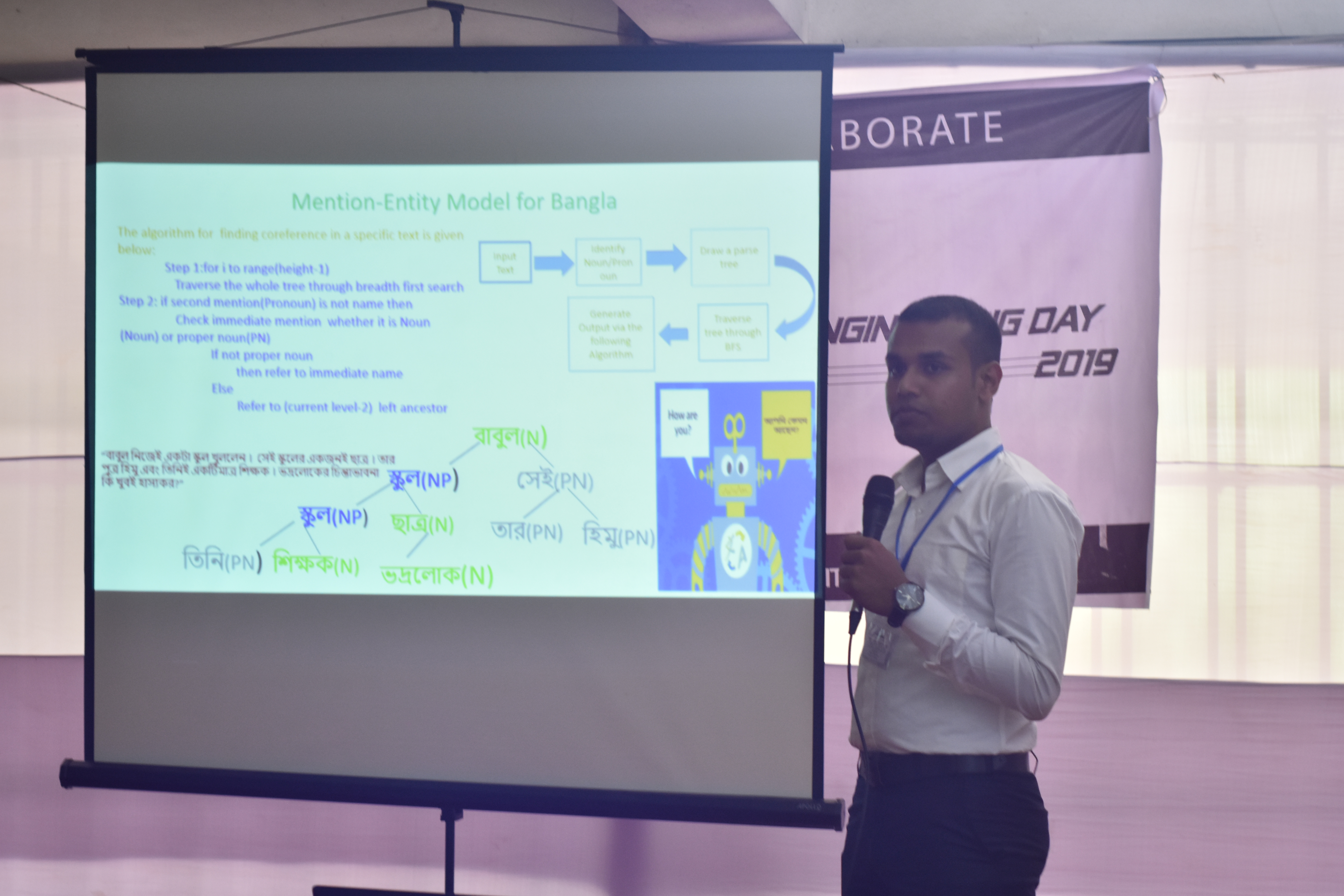
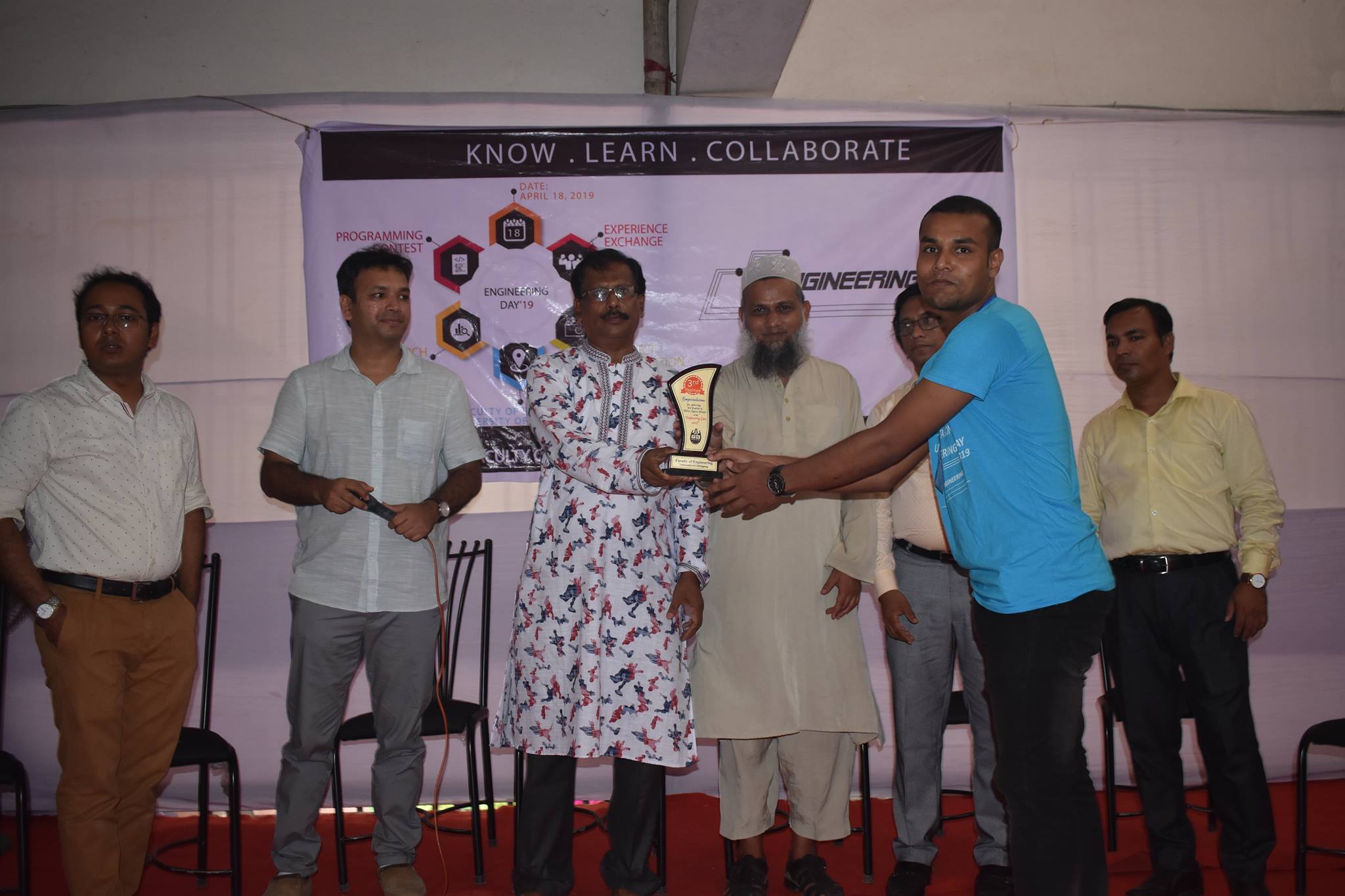
3rd Position — 3MT Thesis, Engineering Day

University of Chittagong

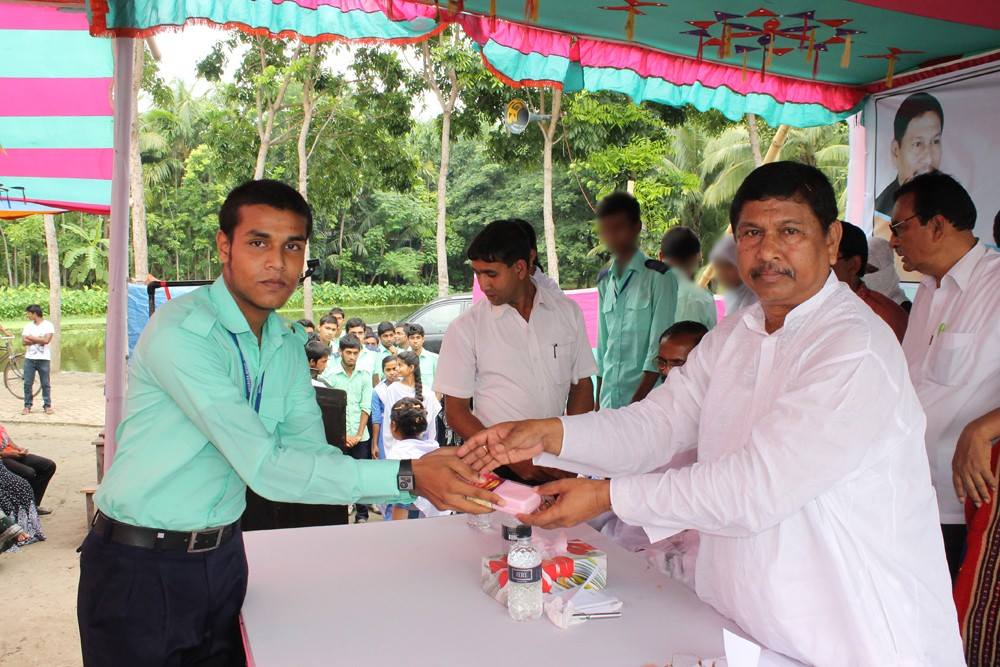
Honorary Award — Prothom Alo & Teletalk

Awarded for SSC examination performance

Scholarship — Jessore Education Board

Merit scholarship awarded by the board

Proud Moments

AAAI Web and Social Media 2025
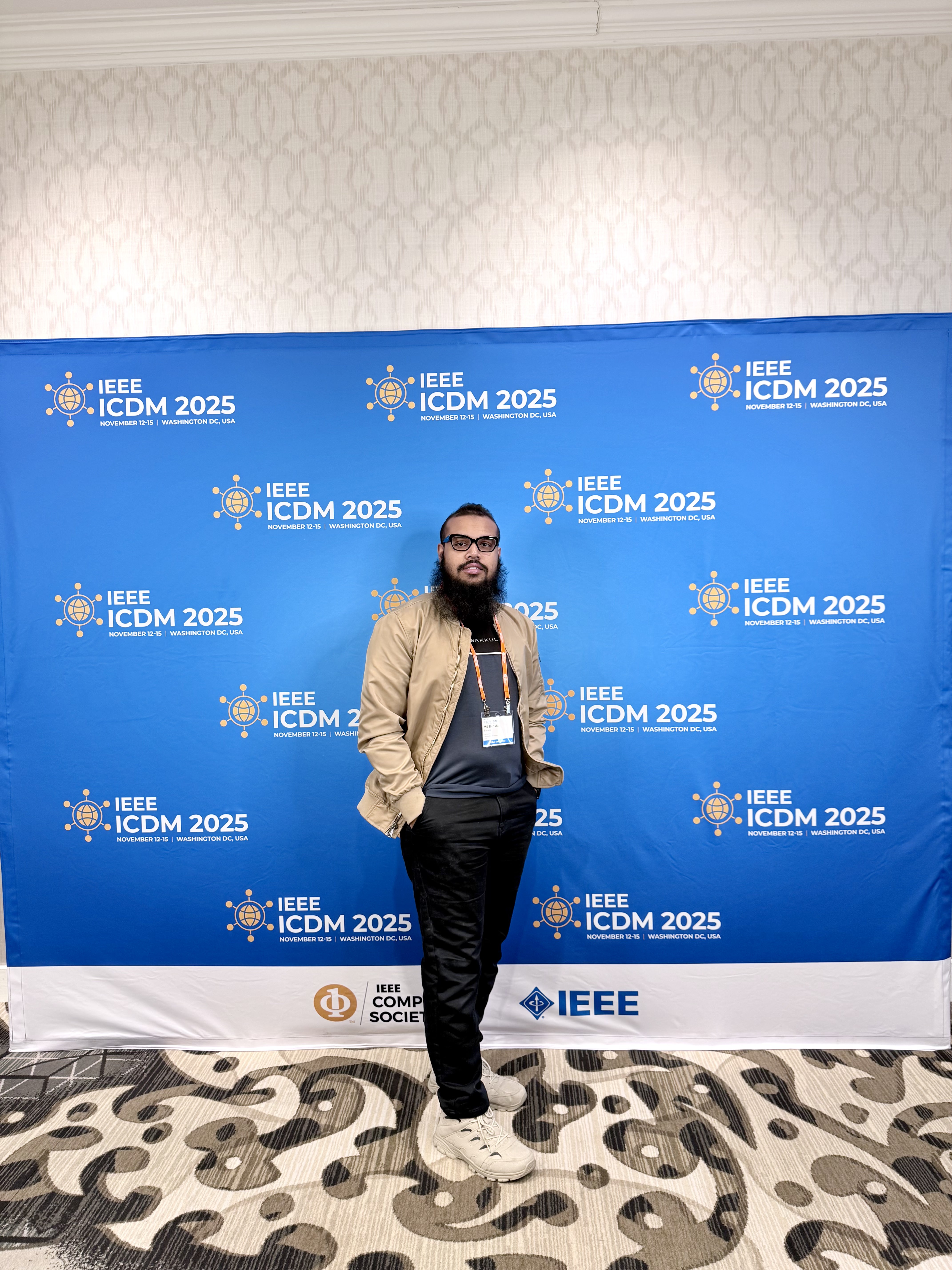
ICDM 2025
ICDM 2025
3MT Presentation
3MT Presentation
Award 3MT Thesis
Award 3MT Thesis
Award Ceremony
Award Ceremony
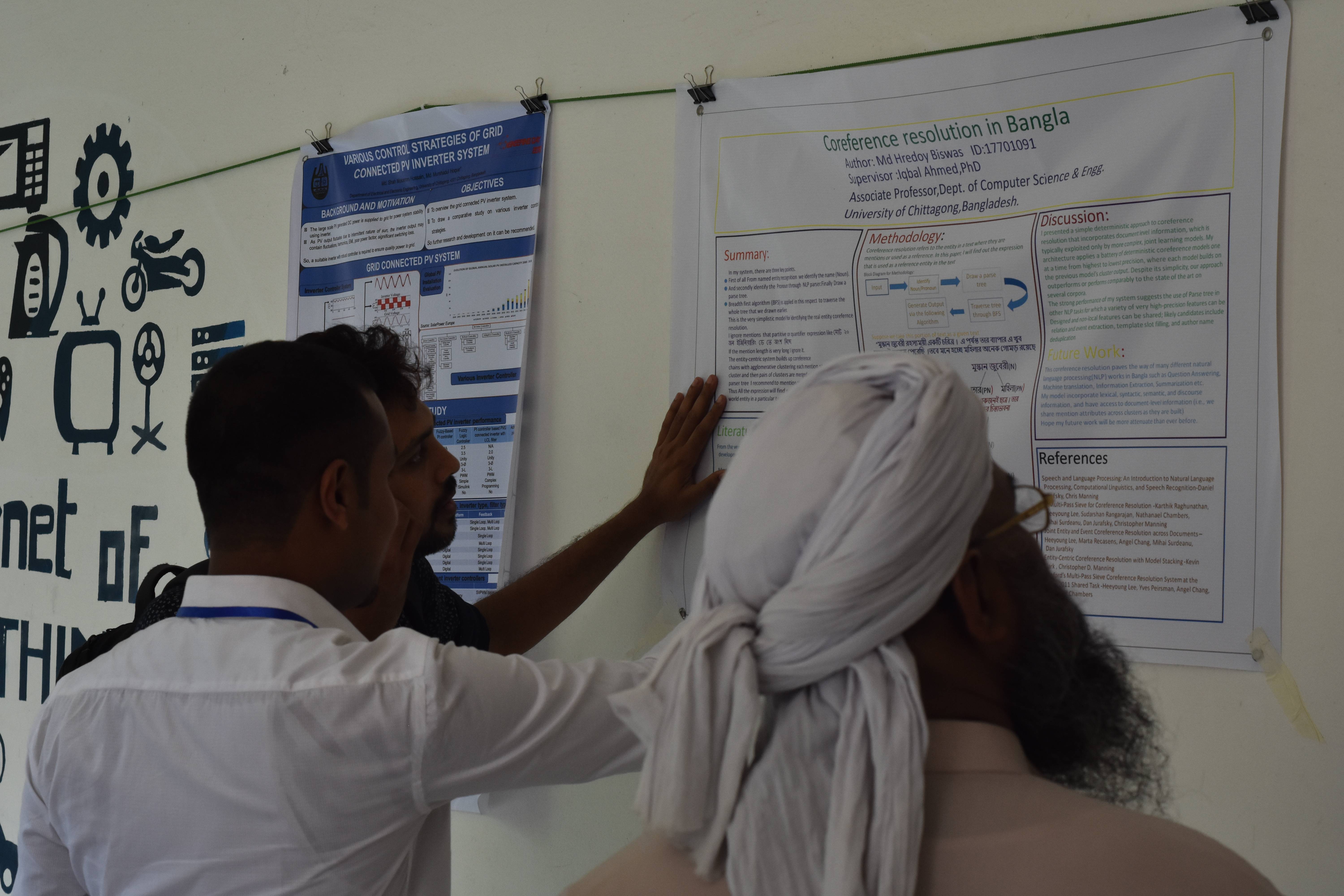
Poster Presentation
Poster Presentation

Service & Activities

Academic Service

Reviewer

Conference and journal reviews across multiple venues in Computer Science

Teaching

Graduate Teaching Assistant responsibilities at George Mason University

Mentoring

Undergraduate research mentoring and guidance in Computer Science projects

Professional Activities

Conference Organization

Student volunteer at various international conferences in Computer Science and AI

Community Service

Outreach activities promoting Computer Science education and technology literacy

Education

George Mason University Logo

Doctor of Philosophy (PhD) in Computer Science

George Mason University, Fairfax, VA

Aug 2023 – May 2027 (Expected) GPA: 3.85

Research Focus: Machine Learning, Deep Learning, Natural Language Processing, LLMs (RAG, Agentic AI), Reinforcement Learning, Multimodal Reasoning, Generative AI

George Mason University Logo

MS in Computer Science — Machine Learning Concentration

George Mason University, Fairfax, VA

Aug 2023 – May 2026 (Expected) GPA: 3.85

Coursework & Focus: Machine Learning, Deep Learning, Statistical Methods, Applied NLP, Reinforcement Learning

Bachelor of Science (B.Sc.) in Computer Science & Engineering

University of Chittagong, Bangladesh

Jan 2017 – Aug 2022

Professional Experience

George Mason University Logo

Graduate Teaching Assistant

George Mason University — Virginia, United States

Oct 2023 – Present Part-time · 2 yrs 6 mos · On-site

Courses: CS 211: Object-Oriented Programming; CS 310: Data Structures

  • Led lab sessions and office hours for undergraduate courses; assisted in grading assignments and creating assignments and exam materials.
  • Tutored students in Data Structures and Java, improving average assignment scores and helping reduce office-hour wait times.
  • Contributed to course material updates and automated marking scripts.
George Mason University Logo

Graduate Research Assistant

George Mason University — Fairfax, Virginia, United States

Aug 2023 – Oct 2023 Research Assistant · 3 mos

Worked on key management and network security research; contributed to experiments and codebases.

  • Implemented prototype systems for key management and secure communication.
  • Assisted in data collection, experimental evaluation, and documentation for publications.

Machine Learning Research Intern

Cogniaide, TN, USA

May 2025 – Aug 2025

Tech Stack: LangGraph, LangChain, Python, PyTorch, FastAPI, MongoDB, Weaviate, Docker, Kubernetes (GKE)

  • Engineered and coordinated a multimodal RAG QA chat system and Deep Research with parallel tool execution for 1.5x–1.7x faster responses and 35–40% efficiency gains; cut reasoning time by 98%.
  • Designed and developed a multi-agent writing system with LangGraph and LangChain, improving first-draft writing time by 95%.
  • Hardened confidential workflows by deploying privately owned Azure models behind private endpoints and role-based access.

BJIT logo

Software Engineer

BJIT Group, Tokyo, Japan

Jul 2022 – Jun 2023

Tech Stack: Spring Boot, JPA, JSP, Amazon EC2, Spiral DB, REST APIs, Python, JIRA, Redmine, JWT

  • Engineered a personalized advertising and recommender system for a doctor–patient portal using user signals and session context, improving relevance and reducing manual campaign tuning by 70%.
  • Designed and organized the end-to-end data pipeline from Spiral DB to serving layer, developed ETL, computed features, and integrated ML stages feeding REST APIs; deployed on Amazon EC2.
BJIT logo

Software Engineer Intern

BJIT Group, Tokyo, Japan

Apr 2022 – Jul 2022

Tech Stack: Spring Boot, Hibernate (JPA), JSP, REST APIs, React, JavaScript, MySQL, Node.js

  • Developed a training-management platform for BJIT Academy with real-time messaging and SNS to streamline trainer–trainee communication.

Latest News

  • [May 2025] Started as Machine Learning Research Intern at Cogniaide, TN, USA.
  • [Dec 2024] Currently pursuing PhD in Computer Science at George Mason University.
  • [Aug 2022] Completed B.Sc. in Computer Science & Engineering from University of Chittagong, Bangladesh.
  • [Aug 2022] Worked as Software Engineer at BJIT Group.
  • [2021] Presented poster on "Coreference Resolution for Bangla" in NLP.
  • [2021] Worked on TREC-IS project under supervision of Dr. Abu Nowshed Chy.

Get In Touch

Email

mbiswas2@gmu.edu

Office Location

George Mason University
Fairfax, VA, USA

Research Interests

Machine Learning Deep Learning Natural Language Processing LLMs Reinforcement Learning Multimodal Reasoning Generative AI

Let's Collaborate!

Feel free to reach out if you're interested in collaboration or have any questions about my research. I'm always excited to discuss new ideas and opportunities!